
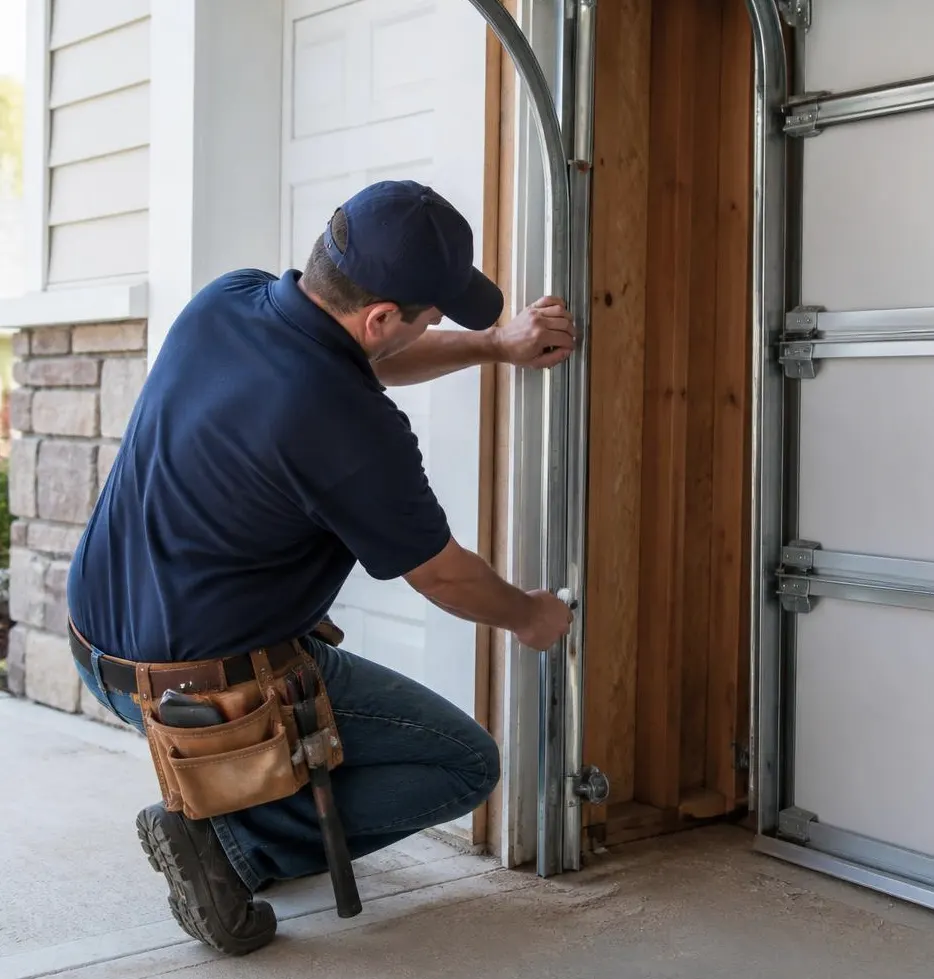
The Call We Get Most Often About Door Material
A typical service call starts the same way: a homeowner wants to know why their door looks rough after only a few years. Sometimes it's a wood door with swollen panels and peeling paint near the bottom edge where snowmelt and road salt splash up during winter. Sometimes it's a steel door with a rust bloom starting at the corners after a few seasons of slush and salt spray. Other times it's a dented aluminum panel after a spring storm, or a homeowner asking if there's a door out there that just won't need this much babysitting. The honest answer is that every material has a weak point in this climate — the question is which trade-offs you're willing to live with.
Steel Doors
Steel is the standard choice for most homes in this area, and for good reason. It handles the big temperature swings between summer humidity and winter cold without warping, and it stands up well to wind-driven debris during storm season. Most residential steel doors are layered with insulation sandwiched between an inner and outer skin, which helps on the coldest nights when an attached garage shares a wall with living space.
The weak spot is rust, especially at the bottom panel and around hardware where road salt and slush collect over winter. A factory finish with a good primer coat resists this for years, but dents from hail or a stray basketball can chip through the coating and start corrosion if they're not touched up. Steel doors come in a wide range of gauges — thicker steel costs more but resists denting better, which matters more here than in milder climates because of storm season.
Wood Doors
Nothing matches real wood for curb appeal, and it's still a common upgrade on homes with a more traditional look. But wood is the material that struggles hardest with this area's weather pattern. Humid summers swell the panels, cold dry winters shrink them back, and that constant expansion and contraction eventually cracks seals, loosens joints, and lets moisture behind the paint or stain. Add road salt splash-back in winter and you've got a recipe for rot at the bottom rail within several seasons if maintenance slips.
Wood can absolutely last if it's refinished on a regular schedule and the bottom seal is replaced before it fails, but it's the highest-maintenance option here by a wide margin. It's a good fit for homeowners who genuinely enjoy the upkeep or who want the look badly enough to accept the extra work.
Aluminum Doors
Aluminum's main selling point is that it never rusts, which sounds like an obvious win given how much salt gets tracked around here in winter. It's also lighter than steel, which can be easier on an aging opener. The trade-off is that aluminum dents easily and doesn't bounce back — a hard hail stone or a bump from a car bumper leaves a mark that steel would shrug off. In a region with real spring storm and tornado season, that's a meaningful downside. Aluminum also tends to transmit cold more readily unless it's a well-insulated model, so it's not the top pick for an attached garage that connects to living space.
Fiberglass Doors
Fiberglass is less common on residential garages in this area, but it has a specific advantage: it won't rust and it holds up better than aluminum against minor dings. It's often built over a steel or aluminum frame with a fiberglass skin, which gives it decent rigidity. In extreme cold, fiberglass can become more brittle and prone to cracking at the corners, so panel quality matters more here than in a milder climate. It's a reasonable option for a detached garage that doesn't need heavy insulation, but it's rarely the best all-around choice for a primary attached garage through a full winter.
Composite Doors
Composite doors, often made from wood fiber composites with a protective coating, aim to give you the wood look without wood's moisture problems. They resist swelling and rot better than solid wood and don't rust like steel. They tend to cost more upfront than steel but less than true wood, and they hold paint and finish longer through humid summers and freeze-thaw winters. The main trade-off is impact resistance — most composite doors are closer to wood than steel in how they handle a hard hit, so they're not the strongest option if storm debris is a regular concern.
What We Recommend for Most Homes Here
- Attached garage, typical ranch or two-story home: insulated steel, mid-to-heavy gauge, for the best balance of dent resistance, rust resistance with proper finish, and insulation value against winter cold.
- Detached garage with lighter use: aluminum or fiberglass can work fine since insulation and impact resistance matter less.
- Homeowners set on a wood look: composite gets you close to the appearance of wood with far less maintenance through our freeze-thaw cycles and humid summers.
- True wood: only recommended if you're committed to refinishing on a set schedule and replacing weatherstripping before it fails.
For the vast majority of homes in Richton Park and the surrounding south suburbs, a quality insulated steel door is still the most practical choice given what the local weather does to a garage door year after year.
When to Call Richton Park Garage Door
If you're weighing a replacement because your current door is rusting out, warping, or just not insulating well enough for winter, our Garage Door Installation service includes a walkthrough of material options based on how your garage is used and how exposed it is to weather. If you're not ready to replace anything yet but want your current door to hold up better through the next freeze-thaw cycle, our Garage Door Maintenance service checks seals, hardware, and finish condition before small problems turn into bigger repairs.
If you're in Richton Park, Park Forest, Matteson, Olympia Fields, University Park, Crete, Steger, or Homewood and you're ready to talk through the right door material for your home, give Richton Park Garage Door a call. We'll give you a straightforward answer, not a sales pitch.