
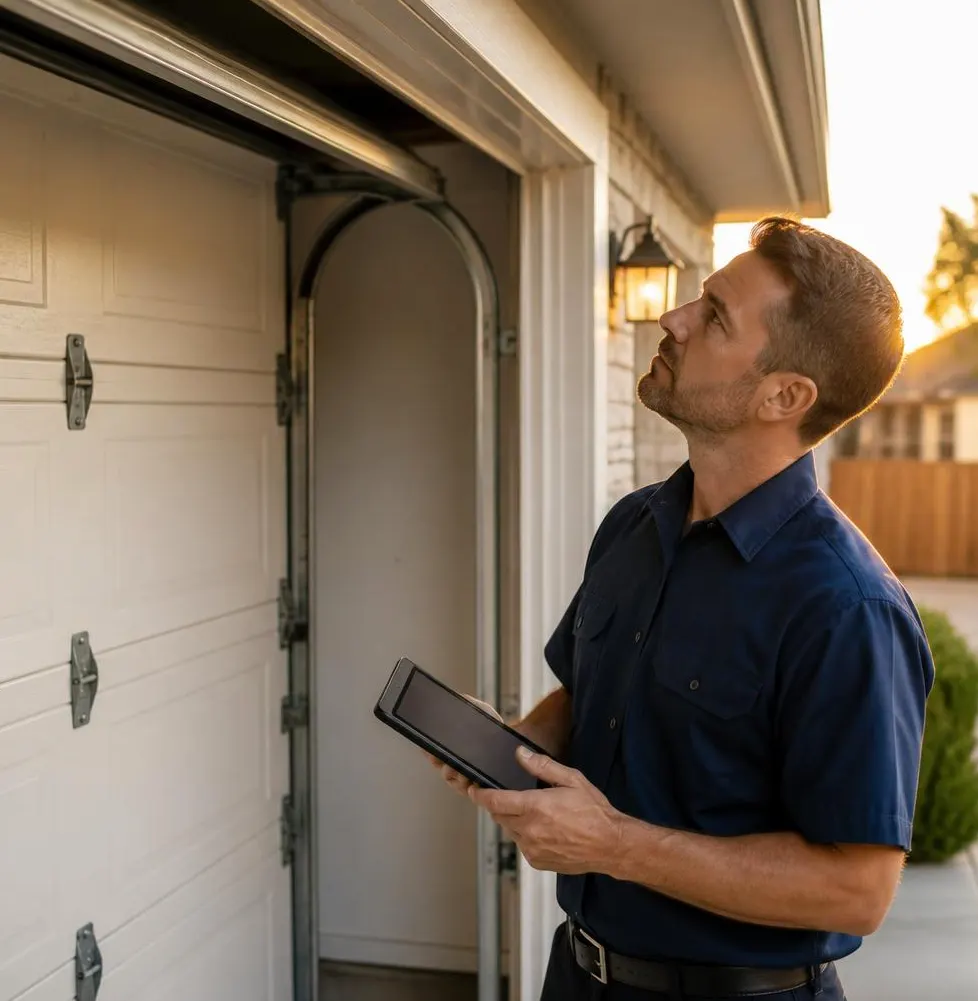
What a Technician Sees After a Windstorm Call
The calls usually sound the same. A homeowner heard a bang during a storm, went out the next morning, and found the garage door sitting crooked in its frame. On the truck, the most common finds are a track pulled away from the wall studs, bent track rail where the rollers jumped the channel, a bowed panel that was pushed in or sucked out by pressure, or a bottom bracket torn loose. Sometimes the opener itself is fine, but the door won't travel straight because the track geometry shifted just enough to bind. None of this requires a direct tornado hit. A strong straight-line wind gust against a two-car-wide door is often enough.
Why the Garage Door Is the Weakest Wall in the House
A garage door is the largest opening in most homes, and it's built differently than a load-bearing wall. It's a series of thin steel or composite panels held together by hinges and rollers, hanging in a track that's anchored to the framing with lag screws and brackets. That assembly has to be both light enough to lift and rigid enough to resist wind pushing on it from outside.
When wind pressure builds against the door and it fails, two things can happen. The door can simply tear out of its tracks, or it can fail inward, letting wind rush into the garage. Once air gets inside a garage, it pushes up against the underside of the roof from the inside, which is a very different load than the roof was designed to resist from above. This is the reason the garage door gets singled out in wind-resistance conversations even though nobody thinks about it until it's the thing that failed.
October Is a Practical Time to Get Ahead of This
This area runs through big seasonal swings, and the garage door takes the brunt of all of them. Winter brings ice and road salt that corrode bottom panels and hardware. Spring brings storm and tornado season. Fall wind events happen too, often with less warning than spring storms because nobody's thinking about severe weather in October. A door that's been quietly loosening its anchor screws or wearing down its rollers all summer is a lot more likely to fail the first time real wind hits it, and that first hit is just as likely to come this month as it is in April.
Doing a real inspection now also sets the door up for winter, since a lot of the same hardware that holds a door together against wind also keeps it sealed and tracking properly in cold weather.
What to Actually Check
- Track anchoring: Look at where the vertical track bolts into the wall framing. Lag screws back out over time from vibration. If you can wiggle the track bracket by hand, it needs to be re-secured before it's tested by wind.
- Panel condition: Check for dents, rust bubbles, or soft spots, especially on the bottom panel where road salt splashes up during winter. A corroded or already-dented panel has less structural give left when wind pushes on it.
- Rollers and hinges: Worn rollers let the door rock side to side in the track instead of running true, which makes it easier for the door to jump the track under stress. Lubricate hinges and rollers with a garage-door-specific lubricant, not WD-40, which washes out and attracts grit.
- Weatherstripping: The bottom seal and side seals aren't just for keeping cold air out. A door that seals tightly resists wind-driven rain and reduces the pressure differential that stresses the panels. Cracked or flattened seals should be replaced.
- Opener force settings and auto-reverse: Put a 2x4 flat on the ground under the door and run it down. It should reverse on contact. If it doesn't, or if the opener strains and slows noticeably under normal operation, the force settings are off or the opener is working harder than it should.
- Cables and springs: Frayed cables or a spring that looks stretched or uneven compared to its pair are signs of a system already under more load than it should be carrying. Wind events add extra stress to a door that's already compensating for worn springs.
For homes with more wind exposure, horizontal bracing struts can be added across the back of the panels to stiffen the door against pressure. It adds cost up front, but for a door that's already a few years old or in a more exposed spot on the property, it's a reasonable trade-off against replacing a blown-out door after one bad storm.
When to Call Richton Park Garage Door
If a track has pulled away from the wall, a panel is visibly bowed, or the door won't travel smoothly after a storm, that's not a weekend DIY fix — the alignment and anchoring have to be corrected by someone who can re-square the whole system, which is where our garage door repair technicians come in. If the inspection above turns up worn rollers, loosening hardware, or an opener that's working too hard, our garage door maintenance service covers exactly that: re-securing track anchors, replacing weatherstripping, lubricating moving parts, and adjusting the opener before any of it becomes a storm-day failure. And if a door won't open or close at all after hours, our emergency garage door service is built for that call.
If you're in Richton Park, Park Forest, Matteson, Olympia Fields, University Park, Crete, Steger, or Homewood and want your garage door checked before the next round of high wind comes through, give Richton Park Garage Door a call. We'll take a look, tell you straight what needs attention, and get it handled.