
Winter-Proofing Your Garage Door Before the First Hard Freeze Hits
The short answer: lubricate the moving parts, replace cracked weatherstripping, check the balance and springs, clear the tracks of summer grit, and test your opener's backup battery. Do this before the first hard freeze, not after, because cold steel and ice-crusted tracks turn small problems into stuck doors and snapped springs fast.
South suburban winters don't ease in gently. One week it's 50 degrees and raining, the next it's single digits with ice on the driveway and salt tracked in from the street. That swing is hard on a garage door system, and most of the damage shows up gradually over a few cold months rather than all at once. A little attention now saves you from standing in the driveway at 6 a.m. trying to get a frozen door open before work.
Lubricate Before the Cold Sets In
Cold makes grease stiffen and thin out oils lose their grip, so parts that moved quietly in August can start grinding by December. Use a silicone-based or lithium-based garage door lubricant, not WD-40, which cleans more than it lubricates and burns off quickly. Hit the hinges, rollers, the springs themselves, and the track where the rollers ride. Skip the plastic idler bearings if your door has them; most don't need oil. Do this in fall and again partway through winter if you notice new squeaks.
Check Weatherstripping and the Bottom Seal
The rubber seal along the bottom of the door and the weatherstripping around the frame are your first defense against drafts, melting snow, and the salt slush that gets kicked up off the driveway. Look for cracking, flattening, or gaps where daylight shows through. A worn bottom seal lets in cold air, moisture, and road salt brine that can corrode the bottom panel and metal hardware over time. Replacement seals are inexpensive and most homeowners can swap them out with basic tools in under an hour.
Test the Balance and Look Hard at the Springs
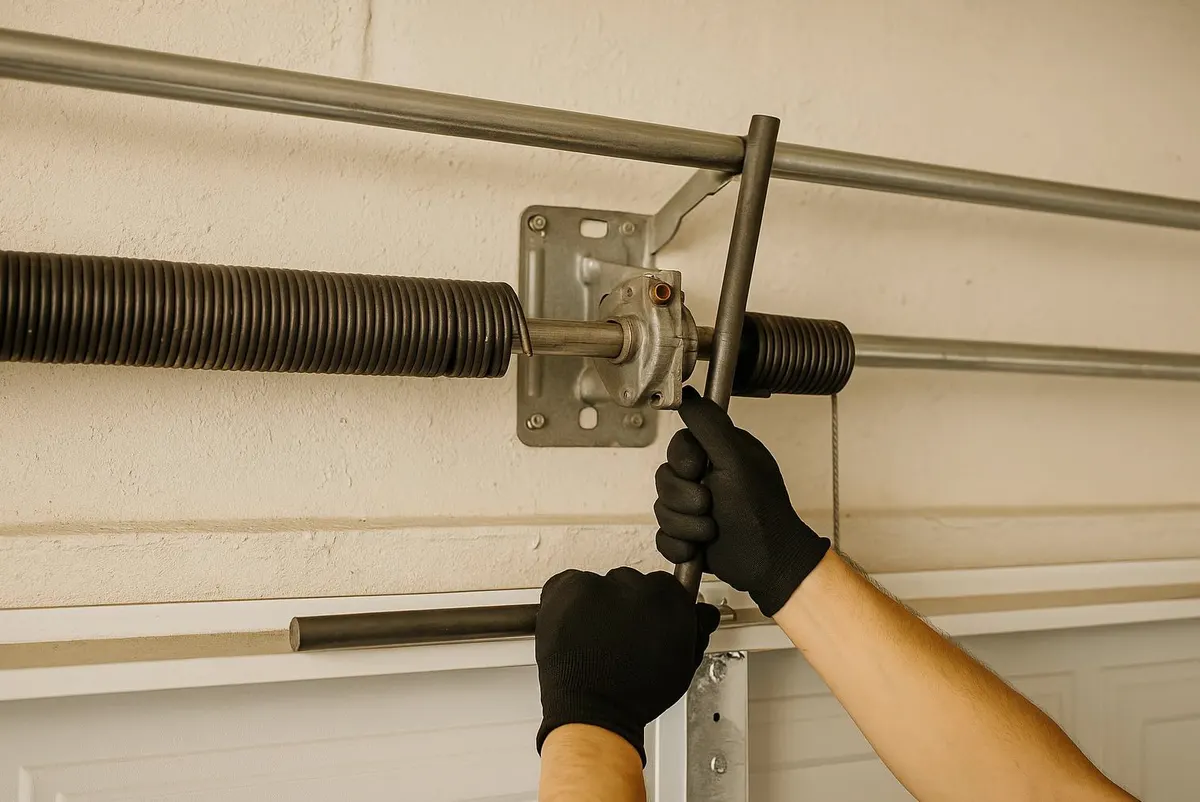
Disconnect the opener by pulling the release cord, then lift the door halfway by hand. It should stay in place on its own. If it drifts down or shoots up, the springs are out of balance and working harder than they should. That matters more in winter because cold steel is more brittle and under more strain than warm steel, which is exactly why spring failures spike in the coldest months. If you spot a spring that looks stretched, has a visible gap in a coil, or the door feels noticeably heavier than it used to, don't wait. A spring that lets go under tension can cause real injury, and this is not a DIY repair.
Clear the Tracks and Watch for Ice Buildup
Over the summer, tracks collect dust, pollen, and grit that gets ground into a paste once winter moisture shows up. Wipe the tracks down with a damp cloth and check that they're still straight and tightly bolted to the frame. Once temperatures drop, keep an eye out for ice forming at the base of the door or inside the track after freeze-thaw cycles. If the door sticks to the ground on a cold morning, resist the urge to force it with the opener, since that strain can bend the track or burn out the motor. Breaking the ice seal gently by hand first is safer for the hardware.
Protect the Opener and Its Sensors
Garage door openers don't love extreme cold any more than car batteries do. If your opener has a battery backup, test it now; backup batteries lose capacity in the cold and are more likely to fail exactly when a winter storm knocks out power. Check that the photo-eye safety sensors near the bottom of the track are clean and properly aligned. Condensation, dust, and the fine salt spray that gets tracked in on car tires can coat these sensors and cause the door to reverse or refuse to close, which is a common cold-weather service call.
Think About Insulation If You Use the Garage Year-Round
If the garage doubles as a workshop, gym space, or just somewhere you don't want to be miserable in January, an insulated door or a retrofit insulation kit makes a real difference against the big temperature swings this area gets. It won't turn the garage into a heated room, but it cuts down on how fast the space loses warmth and reduces condensation on cold metal surfaces, which is one source of rust on hardware and tools stored inside.
When to Call Richton Park Garage Door
Some of this is reasonable to handle yourself on a Saturday afternoon. Springs are not. If your door is unbalanced, a spring looks worn or stretched, or you hear a loud bang followed by a door that won't move, that's a job for our Spring Replacement service, done with the right tension tools and training. We also offer Garage Door Maintenance visits that cover a full lubrication, hardware tightening, balance check, and sensor inspection in one appointment, which is the easiest way to head off a cold-morning breakdown before it happens. And if a door does freeze shut or an opener dies during a storm, our Emergency Garage Door Service covers that too.
If you're in Richton Park, Park Forest, Matteson, Olympia Fields, or anywhere nearby in the south suburbs, get your door checked before the next cold snap. Call Richton Park Garage Door today to schedule a pre-winter maintenance visit.